Trivy: scan images, code, IaC and Kubernetes for vulnerabilities, misconfigurations and secrets
TL;DR
Trivy is one CLI for vulnerabilities, misconfigurations, secrets and SBOMs. In CI use --severity CRITICAL --ignore-unfixed --exit-code 1, record exceptions in .trivyignore with reasons, and export SBOMs with --format cyclonedx.
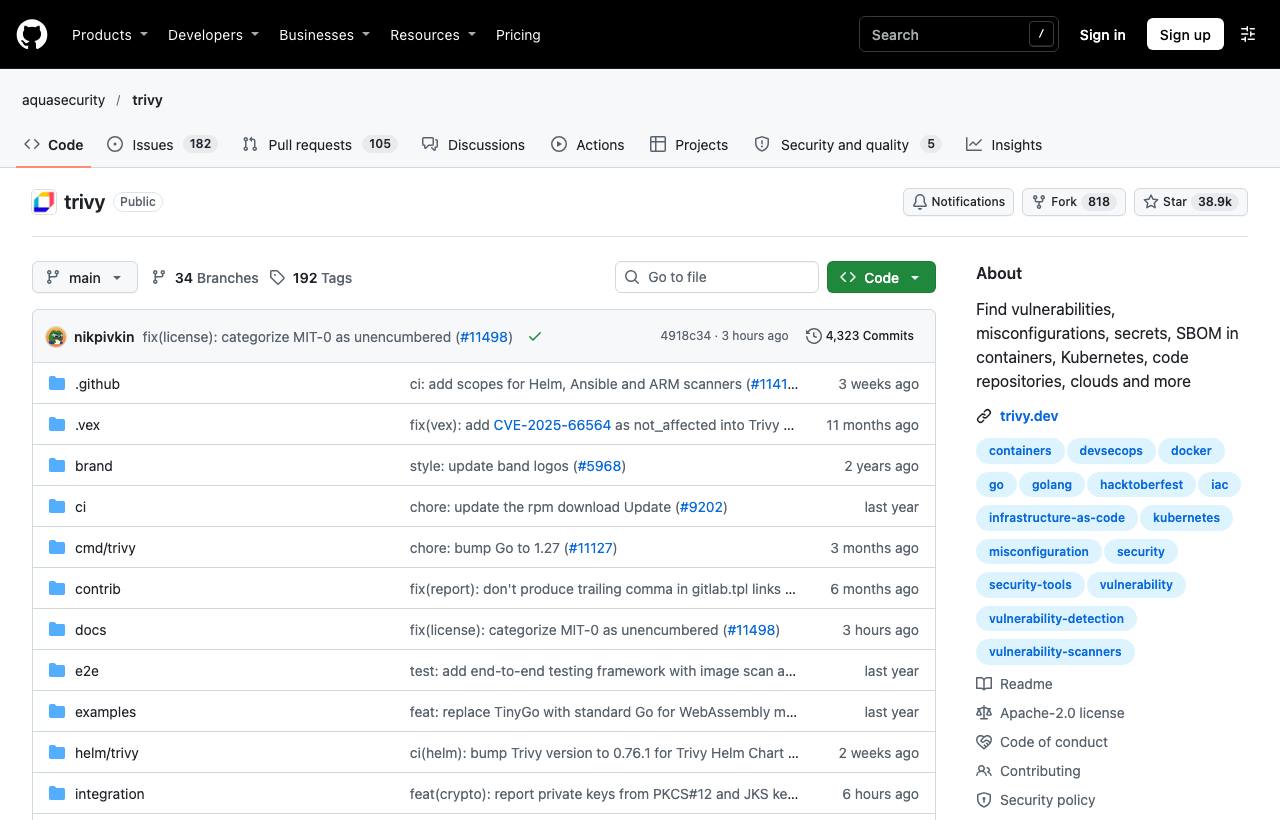
A Docker image that "runs fine" may carry a base OS with dozens of known vulnerabilities, npm or pip libraries with CVEs, Terraform files exposing ports to the Internet, and forgotten secrets. Each of those usually needs a separate tool. Trivy from Aqua Security brings them into one CLI: it scans for vulnerabilities, misconfigurations and secrets and generates SBOMs for container images, code directories, git repos, infrastructure-as-code (IaC) files and even Kubernetes clusters.
Installation
brew install trivy
# Or run with Docker
docker run --rm aquasec/trivy image python:3.12-alpine
On first run, Trivy downloads its vulnerability database; later runs only update it.
Scan targets
| Command | Scans | Example |
|---|---|---|
trivy image | Container images (OS packages + app libraries) | trivy image myapp:1.4 |
trivy fs | Code directories: lock files, secrets, config | trivy fs --scanners vuln,secret,misconfig . |
trivy repo | Remote git repos | trivy repo https://github.com/org/app |
trivy config | Terraform, Dockerfile, Kubernetes YAML, Helm… | trivy config ./infra |
trivy k8s | A running Kubernetes cluster | trivy k8s --report summary cluster |
Filtering results to what matters
A typical image may report hundreds of vulnerabilities, mostly low severity or without a fix. Filter to focus:
# HIGH and CRITICAL only, skip vulnerabilities without a fix
trivy image --severity HIGH,CRITICAL --ignore-unfixed myapp:1.4

# In CI: fail if critical vulnerabilities remain
trivy image --severity CRITICAL --ignore-unfixed --exit-code 1 myapp:1.4

# Ignore CVEs assessed as not applicable: list them in .trivyignore
echo "CVE-2023-12345" >> .trivyignore
Output formats
--format table(default): readable in the terminal.--format json: for scripts and jq.--format sarif: upload to GitHub's Security tab (code scanning).--format cyclonedxorspdx-json: generate an SBOM (software bill of materials), e.g.trivy image --format cyclonedx -o sbom.json myapp:1.4.
Caveats
- Not every CVE is exploitable in your context; use
.trivyignorewith a note explaining why, and review it periodically. - The most effective way to cut vulnerabilities is usually a smaller base image (slim, distroless) and regular updates, not fixing CVEs one by one.
- In CI, cache the vulnerability database to avoid downloading it on every run.
- Results are only valid at scan time; new CVEs appear daily, so rescan running images on a schedule.
How to apply it
- Dev: Run
trivy fs .before opening a PR to spot vulnerable libraries and leftover secrets. - Tech Lead/DevOps: Add
trivy image --exit-code 1 --severity CRITICALafter image builds in CI, runtrivy configon Terraform/Kubernetes folders, and store an SBOM for each release. - PM: SBOMs and scan reports are increasingly required by enterprise customers and regulations; Trivy provides them without tooling costs.
Sources & references
- aquasecurity/trivy — aquasecurity (GitHub)
- Trivy documentation — aquasecurity